
China Pot Still Distillation Techniques That Define Authentic Baijiu
2026-09-14
The soul of authentic baijiu doesn't come from a factory line—it comes from a pot still. In China, this ancient distillation technique is less a process and more a ritual, where fermented sorghum meets fire, steam, and copper, and every subtle cut defines the spirit's character. Yet too many drinkers only know the burn, never the craft behind it. At DYE, we've been tracing those traditional pot still methods to understand why they still matter in a world full of shortcuts. Here's what really separates genuine baijiu from the rest—and why it begins in the curves of a still.
Why the Pot Still Separates Authentic Baijiu From Industrial Spirits
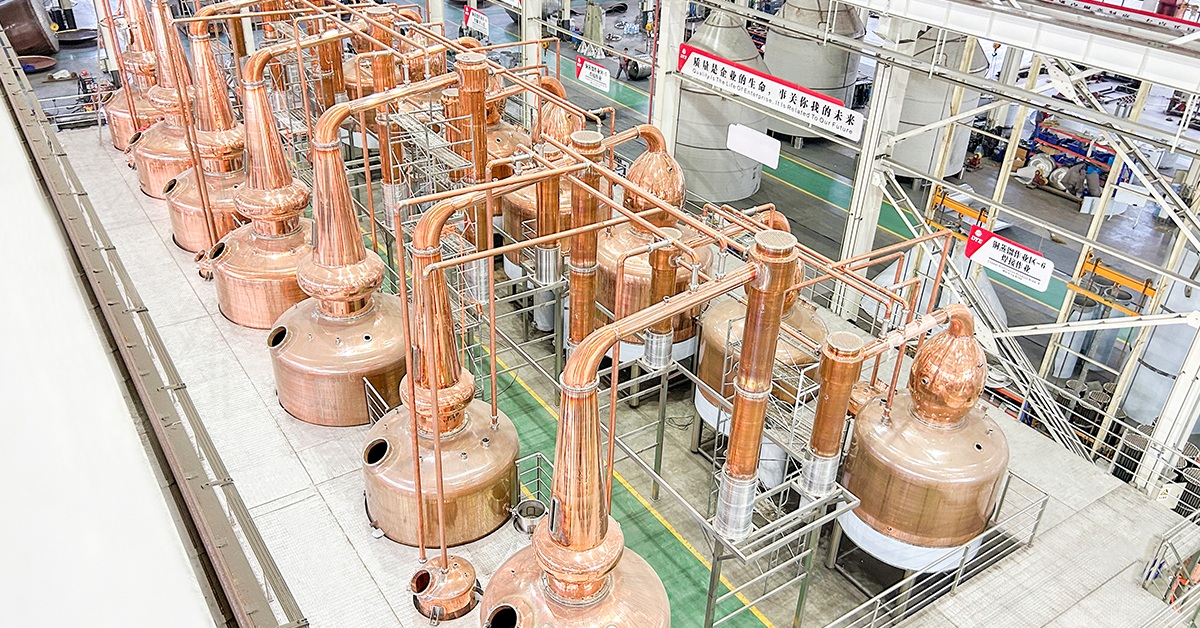
The pot still isn't just a piece of equipment—it's the quiet heartbeat of traditional baijiu. Unlike continuous column stills that strip away character for speed, a copper pot forces the distiller to work in small, deliberate batches. Each run carries the fingerprint of the grains, the local water, and even the ambient humidity of the workshop. That's why no two distilleries produce the same spirit, and why old-timers can tell a northern strong-aroma baijiu from a southern rice-aroma just by the way it rolls off the still.
Industrial spirits chase uniformity. They run fermented mash through towering columns that extract alcohol at 95% purity in a single pass, then dilute and flavor it with additives. The result is clean, cheap, and forgettable. A pot still, by contrast, yields a lower-proof spirit loaded with esters, fatty acids, and other compounds that sound undesirable on paper but taste like roasted nuts, tropical fruit, or fermented bean paste in the glass. That complexity can't be faked, and it's the main reason a well-aged pot-still baijiu commands respect while industrial grain alcohol gets mixed into cocktails.
There's also a practical wisdom to the pot still's inefficiency. Slow distillation means the distiller has to monitor cuts by hand—discarding the harsh heads, keeping the sweet hearts, and deciding how much of the funky tails to recycle. This judgment call, repeated thousands of times across a season, is what separates a master from a machine operator. And because the still retains a little flavor from every previous batch, each new run is a conversation with the past. Industrial spirits have no memory. Authentic baijiu does.
Grain, Qu, and the Quiet Chemistry Before the Boil
Long before the kettle reaches a rolling boil, the grain and qu have already started their work. Crushed millet or rice, still faintly dusty from the mill, meets the cultivated mold and yeast colonies in a warm, damp pile. Moisture wakes the qu, and enzymes begin to slide through the starch, loosening long chains into simpler sugars. It is a slow, almost silent loosening — no bubbles, no steam, just a faint sweet smell that builds around the edges of the mash.
This stage rarely gets much attention because there is nothing dramatic to watch. But the quiet chemistry here decides how much fermentable material will be available later, and whether the final brew will carry a thin, sharp edge or a deeper, rounded body. Temperature shifts of only a few degrees can nudge the enzyme activity one way or another, favoring different sugars and releasing different aromatic precursors. Skilled brewers read the change by scent and by the way a fistful of mash clings together.
By the time the boil finally begins, much of the transformation has already been set in motion. The heat will stop the enzyme activity and lock in a particular profile, but it cannot create what was never there. The patience required in this earlier phase is less about waiting and more about listening to material change at its own pace.
Split-Second Cuts and the Night Watch Over the Still
The line between heads, hearts, and tails rarely announces itself. It arrives in a shift of aroma, a change in the way the spirit beads on a glass, or a faint oily residue that wasn't there ten minutes earlier. Split-second cuts demand more than a timer; they demand a nose trained to catch esters turning from pear to solvent, and a hand steady enough to turn the valve before the good run slips into something rougher.
That's why the night watch over the still is less about staring at copper and more about listening. A still has its own rhythm—a knock in the lyne arm, a change in the sound of the condenser water, a pause in the drip that says the temperature has shifted. The person on watch learns to read these cues in the dark, with only a headlamp and a notebook, making choices that won't be fully understood until the spirit has slept in oak for a few years.
Nobody writes poems about the third hour of a distillation run. But that's where the cut points hide, and missing one by a few seconds can drag an entire batch toward something closer to industrial. The night watch is tedious, cold, and strangely intimate—a solitary negotiation with heat, vapor, and time that turns a recipe into a spirit with a memory.
Copper's Subtle Grip on Aroma and Texture
In a copper pot, the metal isn't just a conductor; it quietly reshapes the volatile compounds that carry aroma. Sulfur-heavy notes that might otherwise sharpen into something harsh get bound to the copper surface, leaving behind a cleaner, sweeter scent. This is why distillers have long favored copper stills—not for show, but because the metal scrubs away unwanted thiols and leaves the fruit or grain character more distinct.
Texture gets a similar, less obvious nudge. Whisking egg whites in a copper bowl creates a foam that's smoother and more stable, because trace copper ions interact with the proteins that would normally tighten too quickly. The result is a finer, glossier meringue that doesn't weep or collapse as easily. Even in small amounts, copper changes how ingredients behave on a structural level, not just how they taste.
Provincial Pot Stills: Maotai's Stone Pit vs. Luzhou's Mud Pit
In Guizhou's Maotai town, the fermentation pits are lined with local stone, their walls sealed to keep the sorghum mash from touching earth directly. The bottom may be mud, but the stone sides create a tightly controlled environment where temperature swings stay small, letting the repeated nine-steam, eight-ferment cycle of sauce-aroma baijiu develop without wild microbial swings. This isn't a flaw; it's a deliberate choice, born from the region's humid summers and the need to keep acidity in check.
Cross into Sichuan's Luzhou and the pits flip material entirely. Here, the pits are carved from dense yellow clay and the walls themselves are living, breathing colonies of bacteria and yeasts. Over decades—some pits have been in continuous use since the Ming dynasty—the mud becomes saturated with caproic acid bacteria, which pump out the fruity, pineapple-like esters that define strong-aroma baijiu. The older the mud, the richer the liquor; dig a fresh pit and the first batches taste thin, almost hollow.
The contrast isn't just technical. Maotai's stone pit prizes stability and restraint, letting the grain do the talking through a long, slow fermentation calendar. Luzhou's mud pit is an active participant, its microbial bloom shaping the final spirit as much as the sorghum. You can taste the difference side by side: one is savory, roasted, almost medicinal; the other is sweet, funky, and explosively fragrant. Same country, same grain base, but the pit's walls pull the flavor in opposite directions.
Teaching the Next Distiller Without a Written Recipe
The old way of teaching a distiller never leaned on a written recipe. A trainee watched the first cloudy drops gather, learned the smell of ethyl acetate before it became obvious, and felt the copper warm under a palm. That physical memory replaces pages of instructions.
When there is no document to fall back on, the mentor has to explain choices that were never articulated. Why cut the heads late on a cold morning? Why keep a jar that seems rough now because it will round out in oak? The apprentice absorbs these reasons slowly, often while scrubbing a condenser or adjusting steam by half a turn.
Over months, the knowledge becomes a shared instinct rather than a sequence of steps. The next distiller stops asking for exact times and starts trusting the sound of the run. That shift is the real handoff, and no written recipe can capture it.
FAQ
The biggest difference is that baijiu distillation often happens with solid fermented grains rather than a liquid wash. The pot still, usually a simple zeng barrel, sits directly on top of a steaming grain bed. Vapors rise through the grain, stripping out aromatics that would never survive in a continuous column. You get a much heavier, funkier spirit with deep umami and nutty notes instead of the clean ethanol profile column stills favor.
Because that fermentation produces the esters, acids, and aldehydes that define the aroma categories—sauce, strong, light, rice, and mixed. If you just fermented a liquid mash like whiskey or rum, the microbial community would be completely different. The solid grains trap heat and moisture unevenly, encouraging lactic acid bacteria and yeasts to build a much more complex precursor mix. By the time it hits the pot still, the wash is basically a flavor bomb waiting to be released.
It doesn't separate as sharply, and that's intentional. The zeng is wide and shallow with a water-cooled lid or coil on top. Vapors condense quickly, so there's very little passive reflux. That means heavy, flavorful compounds like ethyl hexanoate and ethyl lactate carry over into the distillate instead of being stripped away. The distiller relies on experience, nose, and timing to make cuts rather than plate counts or temperature readouts.
At the start of a run you get volatile aldehydes and methanol that smell sharp and solvent-like—that's the head. Near the end, tails bring in bitter, oily, and burnt notes from overheated grains. Skilled operators collect the middle portion, or heart, which holds the signature aroma compounds. If the cut is too wide, you get an aggressive, unrefined baijiu that burns badly. If it's too narrow, you lose the body and complexity. It's a sensory art, not a fixed recipe.
They share the basic principle but differ a lot in material, size, and cooling. Sichuan strong-aroma producers often use larger stainless-steel or stone zengs with quick steam stripping. Sauce-aroma distilleries in Guizhou prefer smaller, often brick or clay-lined pots, and they distill multiple times over stacked fermented grain layers. Light-aroma baijiu from the north tends to use faster single runs with tighter cuts. The pot still itself isn't standardized—it's adapted to the local fermentation style.
A good pot still run gives you a nose that feels layered rather than one-dimensional. You might get overripe pineapple, soy sauce, toasted sesame, fermented bean curd, or floral pear. On the palate there's a warm, spreading heat that doesn't feel like a chemical burn. The finish should linger with earthy, nutty, or dried fruit notes. If it smells flat or tastes like raw alcohol, the cuts were probably rushed or the still was overloaded.
Direct fire creates hot spots on the still bottom, which caramelize sugars and partially toast the grain solids. That adds a subtle smoky, roasted character you can't get with steady steam heat. It's harder to control and easier to scorch, but when done carefully it gives the baijiu a deeper bass note. Steam jackets are cleaner and more consistent, so they dominate industrial production, but high-end small batches often keep the direct-fire tradition alive for that extra layer.
Porosity matters because the still absorbs some of the heavier oils from previous runs and slowly releases them back during the next distillation. Over time, a seasoned clay or stone zeng develops its own micro-flora and a subtle patina that smooths out harsh edges. It also affects thermal conductivity—the spirit heats and cools at a different rate than in stainless steel, changing how the vapors condense. That's why two distilleries with identical grain recipes can still produce noticeably different baijiu.
Conclusion
Authentic baijiu's character owes much to the pot still, a piece of equipment that does far more than simply distill. Unlike continuous column stills used for industrial spirits, the pot still forces a slower, less forgiving process where every batch reflects the choices of the distiller. Before any heat is applied, the grains—often sorghum—are mixed with qu, a naturally harvested culture, and left to quietly transform starches into fermentable sugars. This stage is rarely discussed but sets the foundation for the entire spirit. Once the still is fired, the distiller's attention narrows to the stream of liquid leaving the condenser. Cuts are made by smell, taste, and feel, often in the middle of the night when temperature shifts are most pronounced. There is no timer or automated valve; the person watching the still decides when heads end and hearts begin.
Copper plays an understated role, smoothing out harsh sulfur compounds and lending a subtle roundness to the aroma without erasing the grain's raw personality. Regional stills push this idea further. In Maotai, the stone-lined fermentation pits and specific pot still geometry contribute to the sauce-aroma profile, while Luzhou's mud pits encourage different microbial communities that carry into the distillation. What holds these traditions together is not a manual but an apprenticeship. Younger distillers learn by watching, smelling, and doing—often for years before they are trusted to make a cut alone. The recipe is not written down because it lives in the hands and senses of those who have stood over the still long enough to know when the spirit is right.
Contact Us
Contact Person: Ada Xu
Email: [email protected]
Tel/WhatsApp: 0577-86806088
Website: https://www.dayuwz.com/